- Ultrasound Reprocessing Solutions
- Endoscope Reprocessing Solutions
- Introducing
- Products & Solutions
- Learning & Support
- Featured
- Nanosonics Academy
- About Us
- Investor Centre
- The Centre
You are currently on
An ultrasound probe is placed on the skin or on a mucous membrane, and emits sound energy. The sound energy detects tissues and produces an image of the internal anatomy on a screen called a sonogram.

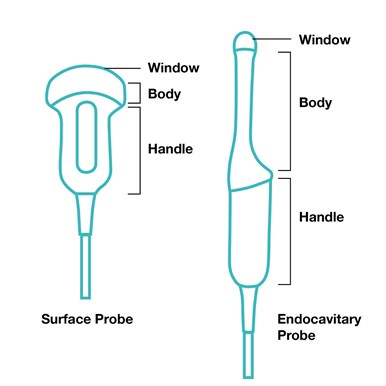
Ultrasound probes have a handle, body and window. The window is the portion of the probe from which sound energy is emitted into tissue and received. There is a cable that extends from the base of the handle to a plug inserted into the ultrasound machine. Depending on the procedure, all parts of the probe may contact the patient to varying degrees.
![]()
Ultrasound has many advantages over other imaging modalities that has led to its widespread use throughout healthcare.
A national survey of infection preventionists found ultrasound was used in every department surveyed (Figure 1).1
The expanded use of ultrasound underscores the need for standardised ultrasound probe disinfection practices. Standardisation ensures best practices are the standard of care for every patient.
![]()
Figure 1. Adapted from Carrico 2018.1 All departments surveyed recorded use of ultrasound.

"The ability to provide high level disinfection that is able to kill HPV at the point-of-care is absolutely phenomenal. It's a huge time saver and supports safe device reprocessing."
Sylivia Ford, MS, RN, CIC
Infection Prevention Nurse
The University of Kansas Health System (TUKHS) USA
Ultrasound probes used in these and many other procedures need to be properly disinfected before use to mitigate infection transmission risks.
The Spaulding Classification tells us how to disinfect ultrasound probes based on how they will be used.