- Ultrasound Reprocessing Solutions
- Endoscope Reprocessing Solutions
- Introducing
- Products & Solutions
- Learning & Support
- Featured
- Nanosonics Academy
- About Us
- Investor Centre
- The Centre
You are currently on

Patient safety as well the financial and reputational health of a facility are at risk when best practice reprocessing is not implemented.
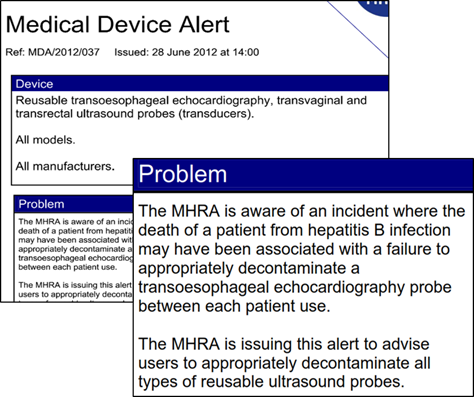
A patient died from hepatitis B thought to have been transmitted by an improperly disinfected endocavitary ultrasound probe.6
The UK Medicine and Healthcare Products Regulatory Agency (MHRA) released an alert for healthcare facilities to review all ultrasound disinfection practices in UK.

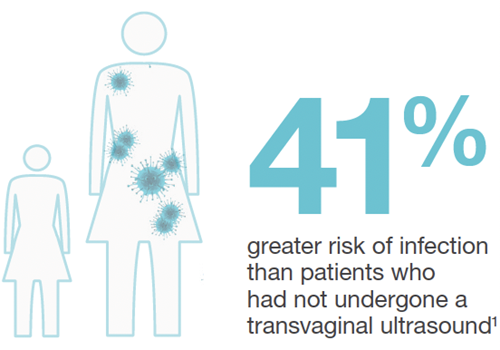
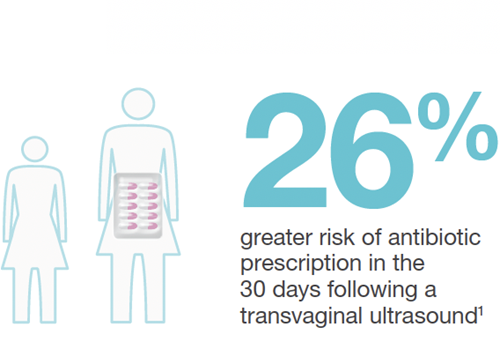
Commissioned by a national health authority, the study revealed an increased infection risk in the 30 days following endocavitary ultrasound.7 90.5% of facilities were not performing high-level disinfection (HLD) of these probes at the time of the study.

Of the 982,911 patients followed, 330,500 were gynaecological patients. 60,698 of these patients had undergone transvaginal ultrasound. The increased rates of infection risk following transvaginal ultrasound were startling.7


The national health authority now recommends HLD for endocavitary ultrasound probes.
Ultrasound probes need to be properly disinfected before use to mitigate infection transmission risks. The Spaulding Classification tells us how to disinfect ultrasound probes based on how they will be used and forms the basis of international ultrasound probe reprocessing guidelines. Learn more about The Spaulding Classification and ultrasound probe reprocessing guidelines.